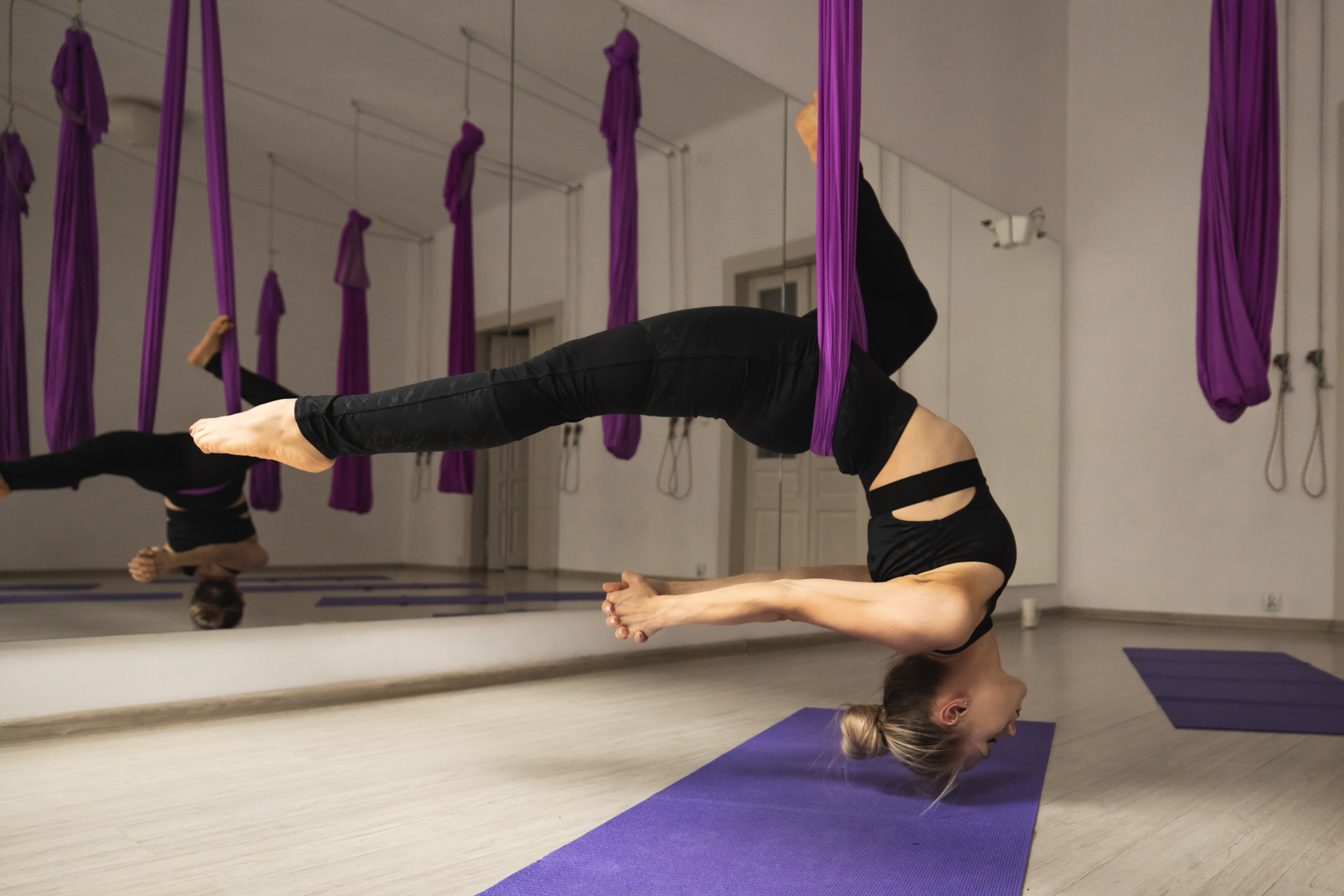
- Oh, but my darling, what if you fly?
Grandma Iyengar has introduced accessories into the yoga practice. Although there are many people who still believe that for yoga no other thing than body is necessary. Well, a mat can be helpful.
Aerial yoga (also called aero yoga, air yoga, fly yoga, anitgravity yoga, or yoga in the hammock) is a type of yoga that is practiced in a silk hammock suspended from the ceiling to support your body weight, instead of stretched out across a mat lying on the floor.
Your first look at the latest fitness trend on Instagram (under the hashtag #AerialYoga) will give you pics of gorgeous, gravity-defying poses. But you don’t have to be an acrobat to learn and love aerial yoga. Just because aerial yoga focuses on movements in the air doesn’t mean there’s zero floor work, though. An aerial yoga session teaches how to use both the hammock and the floor. However, some more advanced classes require climbing up and staying in the air.
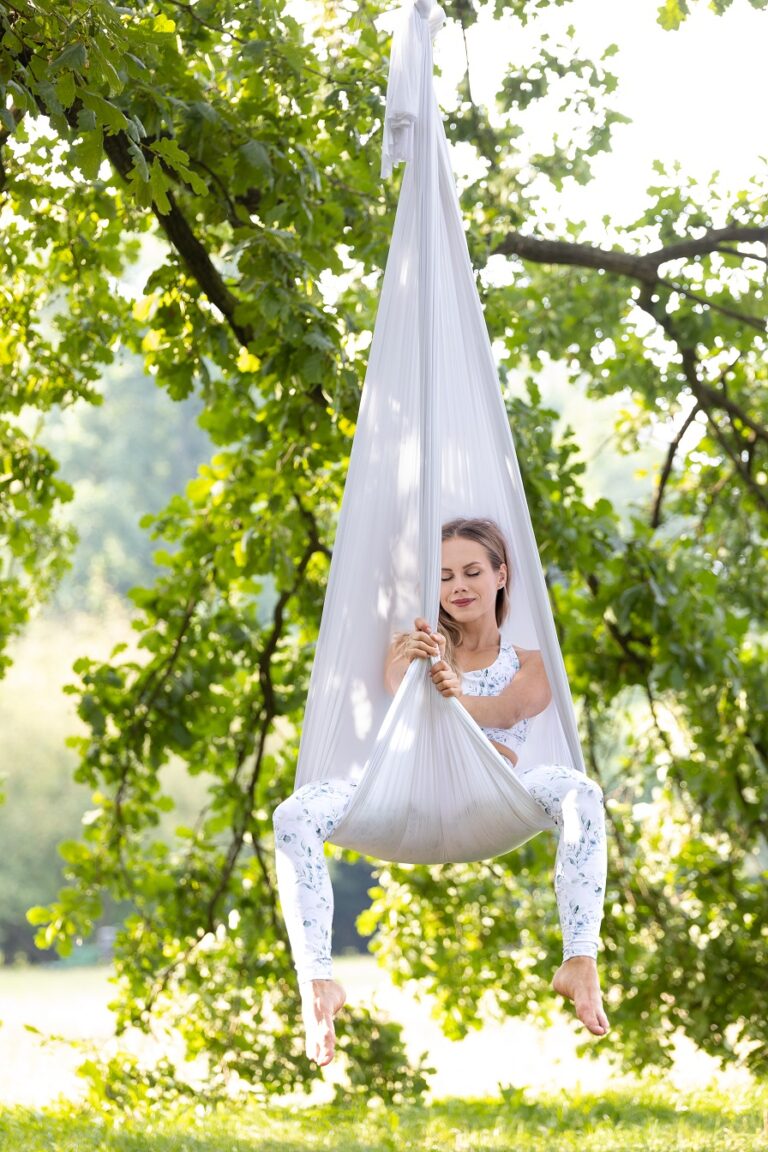
Using a hammock during yoga practice has a few additional benefits:
- full body workout,
- core muscles enhancement,
- easier access to inverted poses,
- spine decompression,
- low-impact exercise,
- circulation enhancement and lymphatic movements,
- stress relief,
- mood booster,
- focus and proprioception improvement,
- empowerment.
To know more, click here -> benefits of aerial yoga
How to start?
I highly recommend finding a studio offering this type of class. I’m aware it is not so popular yet and it is not always easy or even possible. Of course, you can always buy a hammock and install it in your house, but please be careful. Make sure that during your first tries, there is always someone near you to help you.
What to expect during an aerial yoga class?
Although most aerial yoga photos you will find online show a yogi fully suspended in the air, many aerial poses only require you to take one body part such as your foot or leg off the ground.
You might think that flips and inversions are at the top of the list, however, before even discussing specific movements, the first thing you should expect is to face your fears and learn to trust both yourself and the hammock.
Depending on the teacher, and class type, an aerial yoga class can be anywhere from a slow-flowing, meditative, restorative experience with a body-mind-spirit connection to a kind of suspension fitness, using the hammock to gain flexibility, strength, mobility, and agility in preparation for aerial dance and acrobatic flips and tricks.
Some cases when aerial is not the best idea:
Strong contradictions:
- recent surgery, wounds, head injuries, stroke or concussion,
- epilepsy,
- glaucoma,
- brain aneurysm,
- vertigo.
Relative contradictions:
- hip replacements,
- carpal tunnel syndrome,
- severe arthritis,
- disc herniation,
- balance issues,
- severe back or neck pain,
- heart disease,
- hypertension,
- pregnancy,
- taking any medications that cause dizziness.
By relative contradictions, I mean that aerial yoga can be very beneficial for you if the session is created or changed specifically for your condition by an experienced teacher. Otherwise, it might be a risk for you.
Remember that your safety is the most important matter. Always inform the teacher about your health problems or doubts.